Our History
In the history of the oil industry, Romania is named as the first country in the world to have an official oil production of 275 t, in 1857. The same year, Bucharest was the first town to be lit with lamp oil (kerosene), which had been produced in the oil field refinery built close to the town of Ploiesti.
After 1860, the foundations are laid for geological education and research in Romania. University centers are founded in Iasi, Bucharest and Cluj, with geology departments being established. In 1882 The Geology Bureau is established and remains active until 1899. In 1896 the Mining and Geology Service is founded (active until 1906) and in 1901 the Petroleum Commission is established, which is active until 1906.
In 1900, Romania is the third highest oil producer in the world. In 1913, natural gas production commences locally.
In 1906 the National Geology Institute of Romania (IGR) is formed. In 1949 the institute is dissolved and reestablished in 1960.
Internationally, the Schlumberger brothers (friends of Henri Coanda, inventor of the first jet plane) conduct a geophysical study in multiple countries, including Romania. There are three steps:
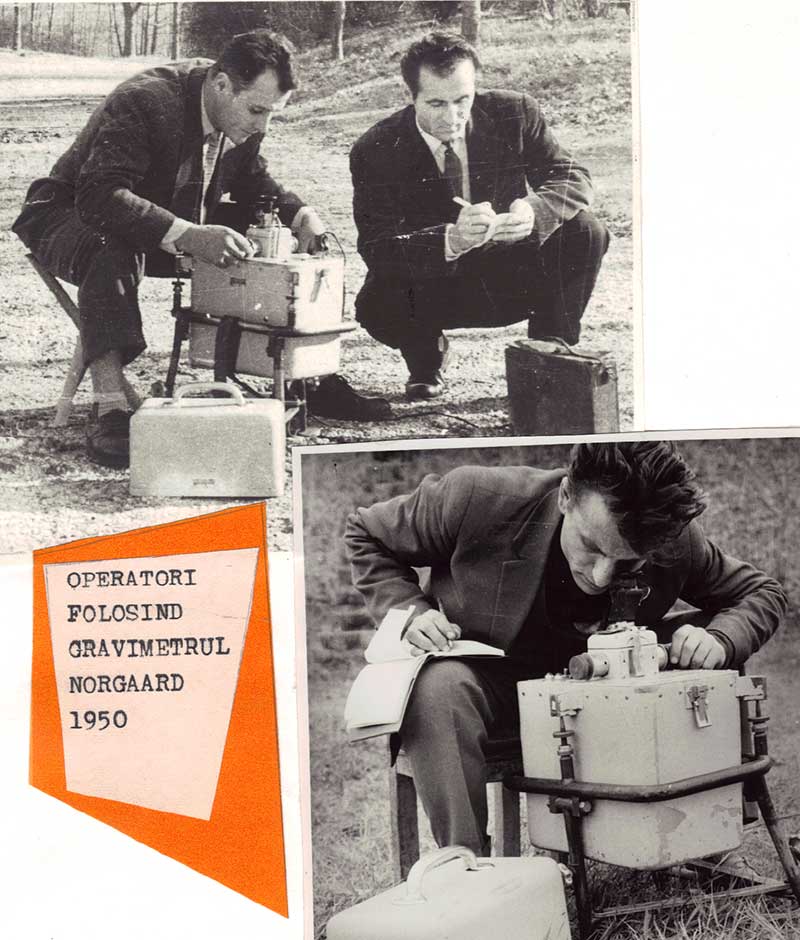
- 1925: first gravimetric and magnetic studies;
- 1933: first electrical well logging;
- 1936: first refraction seismic investigation method;
The first moments of PROSPECTIUNI SA and the main accomplishments:
- 1950, The Research and Prospecting Division of the Geological Committee becomes The Laboratory and Prospecting Company of GC (IPL), which is organized in different field departments as: Geophysical Prospects, Geological Prospects, Technical geology and Hidrogeology.
- 1956, SOVROM-Petrol is dissolved and the Geological and Geophysical Exploration Office becomes the first hydrocarbon company owned by the state, the Geological and Geophysical Exploration Company (IPGG).
- 1965, TREDMIN is dissolved and its activity is taken over by IPL, under the name of the Office for Prospecting and Laboratories (OPL).
- 1970, IPL merges with OPL to become IGP (the Geological Prospecting Company).
- 1971, IPG changes its name to IGPSMS (the Geological Prospecting Company for Solid Mineral Substances), subordinated to the Ministry for Geology and Mining.
1950 – 1970 represents a trail-blazing period in geological and geophysical acquisition activities in almost all geological structures of Romania. The first acquired geophysical data for hydrocarbon reserves were as it follows:
- 1956: First magnetic studies;
- 1958: First refracted waves correlation experiments;
- 1959: First acquired geophysical data with geophones;
- 1961: Analog seismic data processing begins;
- 1962: The geophysical interpretation department is founded;
- 1965: The first use of "full fold" seismic acquisition method;
- 1962-1967: First synthetic seismic maps are built, containing all the geological structures in Romania, at a 1:100 000 scale;
- 1966: First geophysical data acquired in the Danube Delta;
- 1968: The first digital processing seismic software is written;
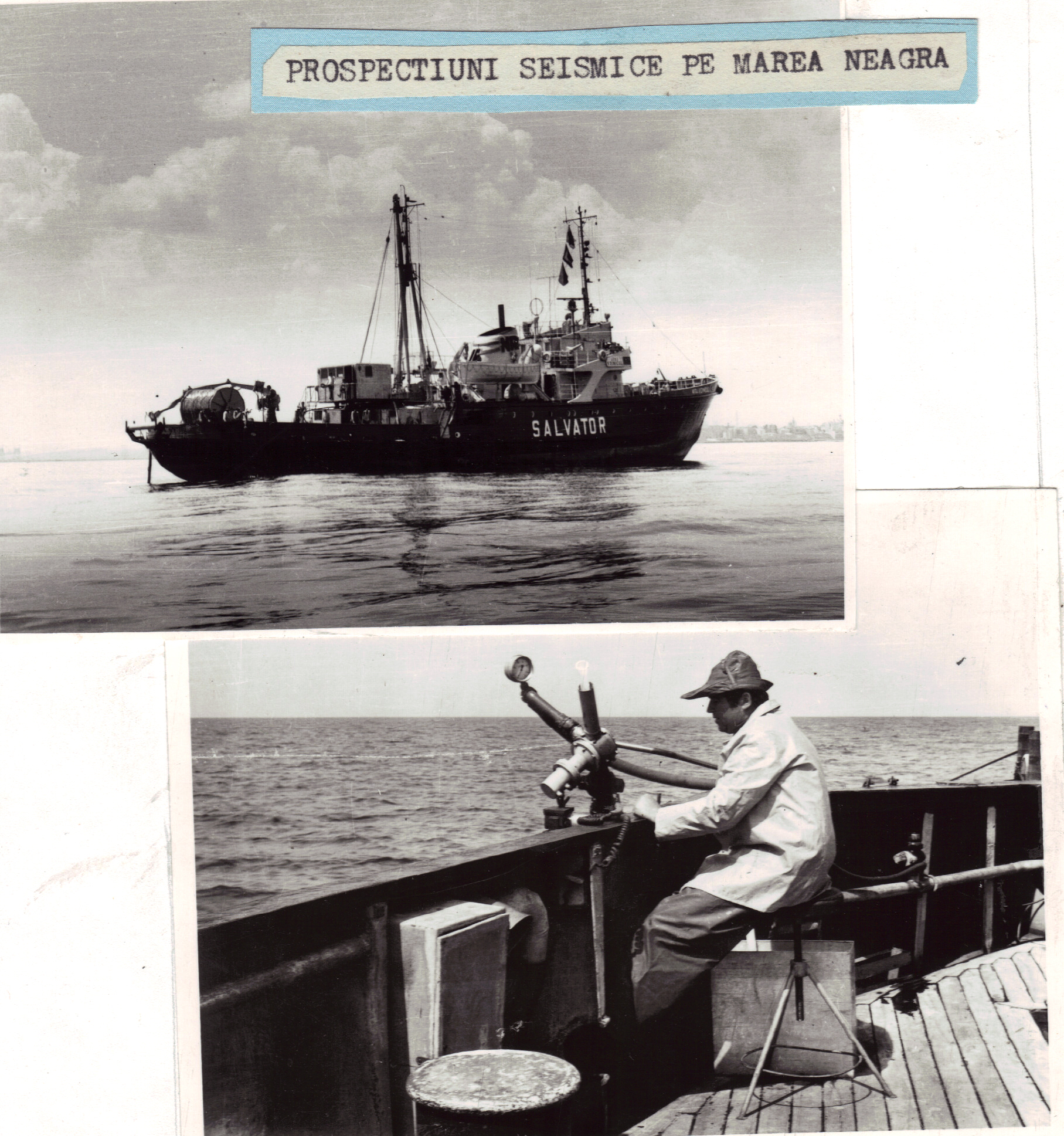
- 1969: First offshore data acquisition on the Black Sea continental shelf. The results will be used after 1987 when offshore oil production starts in Romania.
- 1972: First digital seismic recording;
In 1972 IPGG becomes IPGGH (Geological and Geophysical Company for Hydrocarbon Prospects).
- 1974 - 1981: IPGGH conducts geophysical studies for the Irakian National Oil Company;
- 1975 - 1977: IPGGH conducts geophysical studies for the Syrian Oil Company;
In 1981, IPGGH merges with IGPSMS to become IPGG (the Geological and Geophysical Prospecting Company).
- 1982 - 1985: IPGG conducts 2D geophysical studies in Libia;
- 1982-1983: First 3D seismic recordings in Romania;
- 1987: Offshore oil production commences;
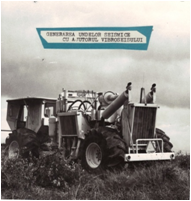
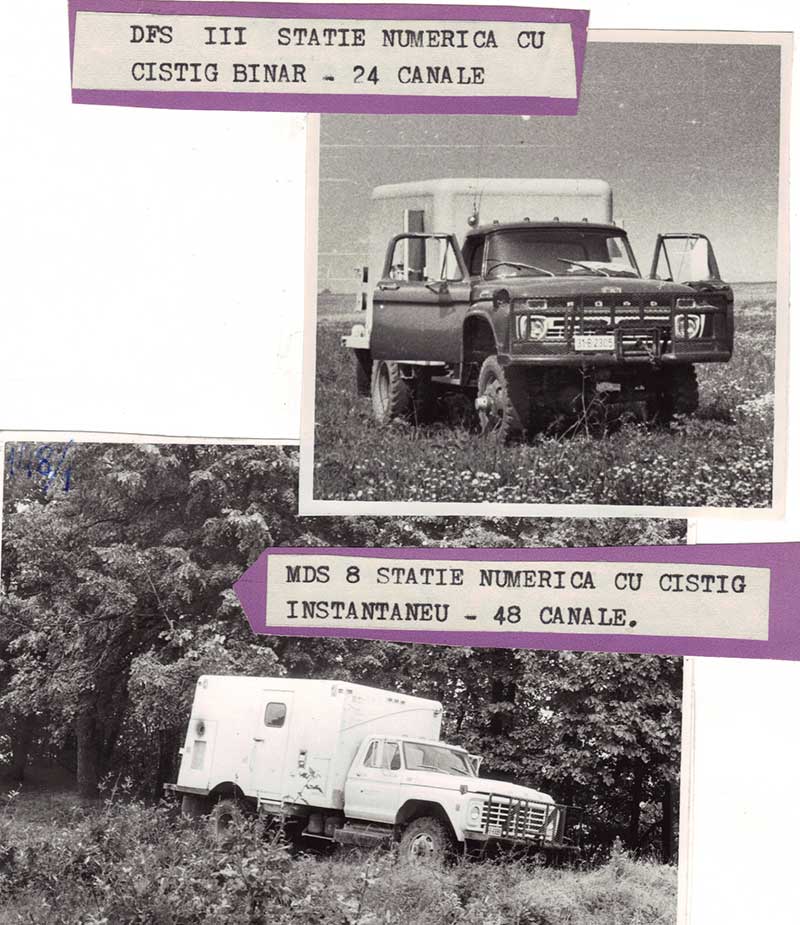
- 1993: For the first time, Prospectiuni uses telemetric equipment for seismic data acquisition;
In 1995, the National Agency for Mineral Resources is founded and the new Petroleum Law comes into force.
In 1997, Prospectiuni is listed on the RASDAQ market on 27.11.1997 (symbol PRSN).
- 1998-1999: Prospectiuni conducts seismic acquisition projects in Moinesti area for MMS Ltd, the first foreign company that got the license for a perimeter in Romania;
In 2000, Prospectiuni becomes a privately-owned company.
- 2000 - 2008: Prospectiuni invests in new technologies and consolidates its professional team. At the same time, SNGN ROMGAZ (2001) is founded, while the company PETROM is privatized. These two with other foreign companies will get exploration licenses and will conduct exploration and exploitation works for hydrocarbon in Romania.
- 2008 A new top management team is formed, consisting of highly skilled international and Romanian experts and specialists. A new strategy of investing in people and in cutting-edge technology and equipment is outlined. The main goals of the Top Management team are to target new territories and clients and stay ahead of competitors through cost-effective services, complying with the highest international HSEQ standards. ;
- 2010 Prospectiuni expands on global market (projects in Romania, Portugal, Morocco, Bulgaria, Senegal);
- 2012 Prospectiuni names 2 Vice-Presidents for Africa and Asia, for a sustainable, long-term global growth. Along the same line, key regional representatives join the team (offices in Bucharest, Morocco, Senegal, Tajikistan and representatives in Italy, Bulgaria, Turkey, Iraq);
- September 2012: Prospecțiuni S.A. completes 2D seismic data acquisition undertaken in Bulgaria, Provadia, Shumen region, for the company Overgas;
- September 2012: Prospecțiuni S.A. completes the acquisition of 3D seismic data performed in north-central Morocco, for the company Caithness Petroleum Ltd.;
- November 2012: Prospecțiuni S.A. wins first place in Top Companies in Bucharest, “Activities of architecture, engineering and technical consulting related services” section, Large Enterprises class;
- February 2013: Prospecțiuni S.A completes the 2D seismic exploration conducted within the Sidi Moktar project in Morocco, for the company Longreach Oil and Gas Ltd .;
- June 2013: Prospecțiuni S.A. enter into a strategic partnership with Geotrace Inc. (SPIDS), leading company in the field of tank services. The alliance provides high-quality processing and interpretation services to exploration and production (E&P) companies in Southeastern Europe.
- February 2014: Prospecțiuni S.A. successfully completes the 2D project for Norio Operating Company Ltd., in Georgia, Caucasus Mountains;
- May 2014: Prospecţiuni S.A. is designated by Capital Magazine as "The best company in energy" in 2013;
- May 2014: Prospecţiuni S.A. is designated winner for the “Partnership between an industrial company and an educational institution” section at the Getenergy Awards, for the 60 years collaboration with the Geology and Geophysics Faculty;
- July 2014: Prospecţiuni S.A. ranks in the top 10 (8th) companies that employed the most people in 2013; the ranking was conducted by economica.net and was based on information obtained from companies and from National Trade Register Office;
- November 2014: Prospecţiuni S.A. wins the excellence award with the "Vibrator versus Egg" experiment in the Video Productions category, at the XII edition of the Romanian PR Awards;
- January 2015: Prospecţiuni S.A. is awarded for its involvement in environmental education campaign EcoAtitudine organized by Infomediu Europe.
- 2014-2015: Although it participates and qualifies in several international auctions, Prospectiuni fails to carry out other international contracts, due to the oil market instability. In Romania it carries out seismic acquisition and processing projects for the local companies as: SNGN ROMGAZ, OMV Petrom, Hunt and Amromco. The period coincides with the international oil crisis and ANRM delay in auctioning new exploration-exploitation licenses in Romania;
- 2015: RASDAQ market is closed so a local transfer to AeRo market, which is managed by the Bucharest Stock Exchange (BVB), will be conducted. Based on 894/18.08.2015 decision, the general manager of BVB approves the stock trading of the company in the alternative system managed by BVB. At the moment Prospectiuni's stocks are listed in the alternative trading system with the transaction code: PRSN. The start date for trading was 21.08.2015.
- June 2015: The company’s international management team resigns;
- July 2015: A new management team is named for the company, made up entirely of Romanian managers. The CEO is Mr Marius Milea, former COO in the previous management team.
- April 2016 - present: Prospectiuni has adapted to the specific market context, capitalizing the opportunities for geophysical data acquisition and processing works, mainly for the discovery of hydrocarbon deposits and those for cased hole logging works and mecanical services&perforating. At the same time, Prospectiuni makes efforts to implements the newest tehnologies, in accord with the requirements of the clients.